The 7 Best Sound Cards for Your PC in 2026
Disclosure: This post may contain affiliate links. If you purchase through these links, we may earn a small commission at no extra cost to you.
Internal sound cards are a niche in 2026 — motherboard audio got genuinely good, and most enthusiasts moved to external USB sound cards and DACs. But the category is far from dead: Creative released two brand-new PCIe cards in 2026, its first in about five years, and there remain three solid reasons to put a card inside your PC — driving serious headphones without a desk full of gear, adding optical surround output your motherboard lacks, and simply replacing onboard audio that died or hisses.
Here are the internal sound cards (audio cards, if you prefer — same thing) actually worth buying in 2026, and — just as important — an honest section on whether your PC needs one at all.
Quick comparison
| Card | Price | DNR/SNR | Headphone amp | Best for |
|---|---|---|---|---|
| Creative Sound Blaster AE-7 | $230 | 127dB | Xamp, up to 600Ω | Best overall |
| Creative Sound Blaster AE-X | $179 | 130dB | X-amp, up to 600Ω | Best new card (2026) |
| Creative Sound Blaster AE-9 | $350 | 129dB | Xamp + desktop module | Flagship / creators |
| Creative Sound BlasterX AE-5 Plus | $160 | 122dB | Xamp, up to 600Ω | Gaming midrange |
| Creative Audigy FX Pro | $80 | 120dB | Discrete 7.1 | Best budget (2026) |
| ASUS Xonar SE | ~$40 | 116dB | Up to 300Ω | Cheapest name-brand |
| Generic CMI8738 PCIe card | ~$20 | — | — | Dead onboard audio fix |
How we picked
We verified Creative's and ASUS's current lineups against their own product pages and 2026 launch coverage, and cut everything discontinued — which was most of the old version of this list. The original Sound Blaster Z, Audigy SE, X-Fi Titanium, and Recon3D are legacy products now; ASUS's Xonar DG, Essence STX II, and Strix cards are gone or effectively unbuyable; EVGA exited the category entirely. What's left is essentially Creative's five current cards, two ASUS holdovers, and the eternal $20 generic — so we ranked by what each is actually good at and who should skip the category altogether.
1. Creative Sound Blaster AE-7 — best overall
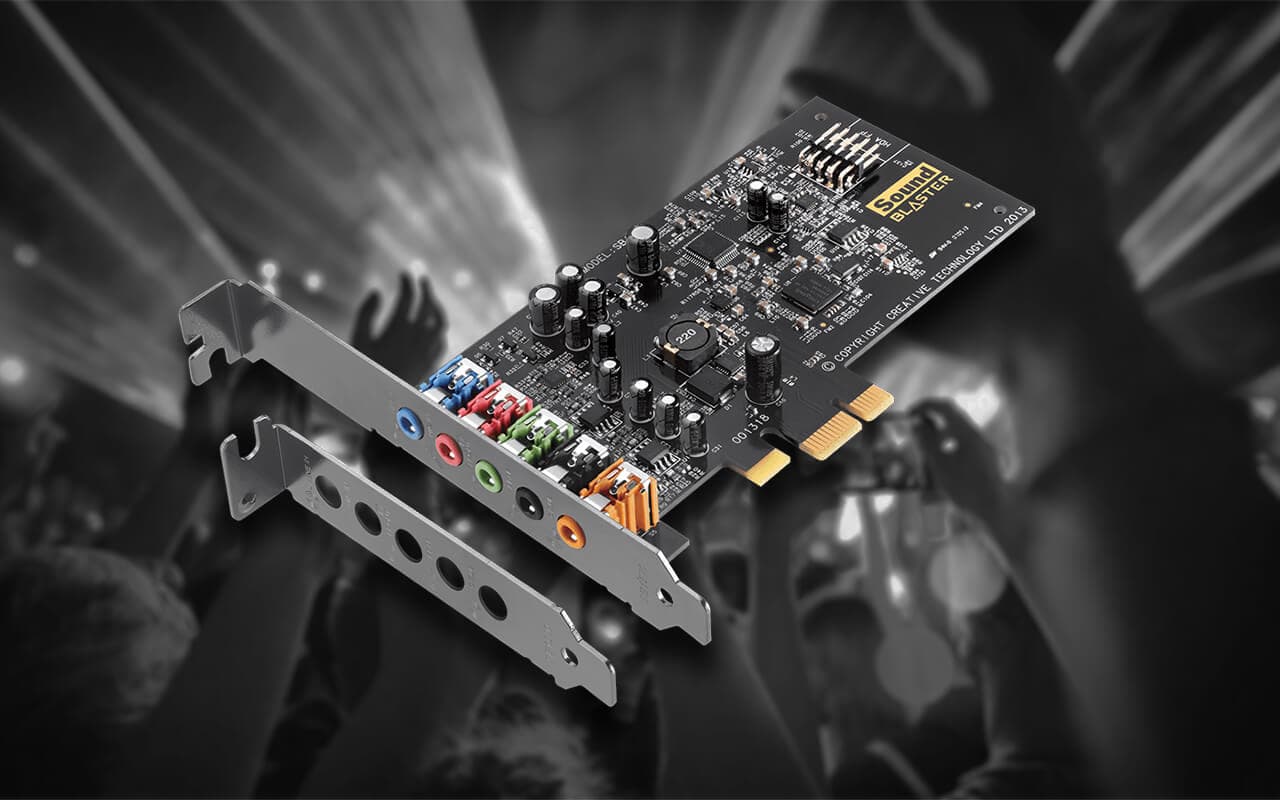
The AE-7 remains the sweet spot of the lineup: an ESS SABRE-class DAC with 127dB of dynamic range, Creative's discrete Xamp headphone amplifier that properly drives anything from sensitive in-ears to 600-ohm studio headphones, Dolby Digital Live and DTS encoding for optical surround, and an included audio control module with a large volume knob and built-in mic. It does everything the flagship AE-9 does that most people can hear, at two-thirds the price.
Pros: Excellent DAC and headphone amp; optical surround encoding; convenient desktop control module; mature drivers. Who it's for: Anyone upgrading from onboard audio who wants one card that covers gaming, music, and good headphones.
2. Creative Sound Blaster AE-X — best new card of 2026
Creative's first genuinely new enthusiast card in years, and on paper its cleanest ever: a dual ESS ES9039Q2M DAC setup rated at 130dB SNR — higher than the AE-9 — plus native DSD256 hi-res support, optical in and out, and a discrete X-amp headphone stage rated to 600 ohms, at $179. What you give up versus the AE-7/AE-9 is the desktop control module. As a pure quality-per-dollar play for headphone listening, it's the new benchmark of the lineup.
Pros: Best measured specs in the range; native DSD256; optical input as well as output; strong price for what's in it. Who it's for: Music-first listeners with good headphones who don't need a desk module — and anyone who wants the newest silicon.
3. Creative Sound Blaster AE-9 — the flagship
The AE-9 is still the most complete internal audio product ever made: 129dB dynamic range from an ESS SABRE-class DAC, a bi-amped Xamp headphone stage, and — its real differentiator — an external Audio Control Module that puts the headphone jacks, a quality microphone input with phantom-style convenience, and a big volume dial on your desk instead of behind the PC. Streamers and creators who record through their sound card are the audience; for pure listening, the AE-X now matches or beats it for half the money.
Pros: Desktop module with mic input is genuinely useful for recording; top-tier DAC and amp; the "everything" card. Who it's for: Streamers and creators who want mic and headphone control on the desk, budget no object.
4. Creative Sound BlasterX AE-5 Plus — gaming midrange
The AE-5 Plus is the gaming pick: 122dB DNR, the same up-to-600Ω Xamp headphone amp as its bigger siblings, Dolby Digital Live and DTS Connect encoding, and RGB lighting with addressable strips if your build leans that way. Creative's software adds the Scout Mode audio cues and EQ profiles gamers actually use. It gives up measurable ground to the AE-7 and AE-X in DAC quality, but in a blind gaming session you'd struggle to tell.
Pros: Full-featured for gaming; real headphone amp at this price; optical surround encoding; RGB if you want it. Who it's for: Gamers who want a clear step up from onboard audio without paying audiophile prices.
5. Creative Sound Blaster Audigy FX Pro — best budget card
The other new-for-2026 release, and the first new Audigy in nearly five years. For $80 you get discrete 7.1-channel output, 32-bit/384kHz playback, 120dB SNR, native DSD support, and a half-height bracket that fits slim and small-form-factor PCs — specs that embarrass what $80 bought in this category even three years ago. It replaces both the old Audigy FX and the Sound Blaster Z SE as the sensible budget answer.
Pros: Modern specs at a budget price; discrete 7.1 output; fits low-profile cases; current product with current drivers. Who it's for: Home-theater PC builders and anyone upgrading tired onboard audio on a budget.
6. ASUS Xonar SE — cheapest name-brand card
ASUS's internal lineup has quietly shrunk to two unrefreshed cards, of which the entry-level Xonar SE is the more sensible buy: 5.1 output, 116dB SNR, a 300-ohm headphone amp, and a low-profile bracket, typically around $40. It won't out-resolve any Creative card above it, but as a cheap, name-brand fix-and-upgrade it does the job. (The step-up Xonar AE exists but is often out of stock and outclassed by the Audigy FX Pro at similar money.)
Pros: Cheap; low-profile option; decent headphone amp for the price; from a major brand. Who it's for: Budget builds where $40 is the ceiling and a no-name card feels too risky.
7. Generic CMI8738 PCIe card — the $20 "make sound work again" fix
When motherboard audio dies — a blown jack, fried codec, or driver rot on an old board — you don't need audiophile hardware, you need working sound for $20. Amazon carries a rotating cast of near-identical budget PCIe cards built on the ancient-but-functional C-Media CMI8738 chip under names like Padarsey and axGear. Zero pretensions, plug in, get stereo or basic 5.1 back. That's the whole review.
Pros: Cheap; solves the actual problem; no software required beyond a driver. Who it's for: Dead onboard audio, old office PCs, and nothing else.
Do you actually need a sound card in 2026?
Honest answer: probably not, and it's worth checking before spending money.
Modern onboard audio is good. Mid-range and better motherboards ship Realtek ALC1220 or newer ALC4080/4082 codecs that are clean enough for powered speakers, gaming headsets, and everyday listening. If your current audio doesn't hiss, crackle, or run out of volume, a card mostly buys you measurements, not an experience.
External beats internal for critical listening. A PC case is an electrically noisy place — GPU, VRMs, fans — and despite intuition, an internal card sits closer to all of it than an external USB DAC does. If your endgame is high-end headphones or studio monitoring, our guides to USB sound cards and what a USB sound card actually does cover the path most enthusiasts take now.
Where internal still wins: everything through one card with no desk clutter or extra cables; Dolby Digital Live/DTS Connect encoding for older AV receivers that only take optical; headphone amping without a separate box; and the $20 dead-audio fix. Those are real use cases — they're just narrower than they were when this article was first written.
Frequently asked questions
Does my old Sound Blaster Z still work on Windows 11? Mostly. The card functions on Windows 11, but Creative's last driver for it dates to early 2022 and the Command software sometimes fails to detect it. Treat it as functional-but-unsupported: fine to keep using, not something to buy in 2026.
What's the difference between SNR and DNR? Both describe how far the signal sits above the noise floor, measured slightly differently — and brands don't measure identically, so compare numbers within a manufacturer rather than across them. Above roughly 110dB, differences are more about engineering pride than anything audible in a normal room.
Do I need Dolby Digital Live or DTS Connect? Only if you connect your PC to an AV receiver by optical (TOSLINK) cable, which can't carry uncompressed surround — these encoders compress 5.1 game audio in real time so the receiver gets true surround. If you use HDMI to the receiver or TV, HDMI carries surround natively and you don't need either.
Sound card or external DAC for high-impedance headphones? Both work — every current Creative AE-series card drives up to 600Ω properly. Pick internal for a clean desk and one-box convenience, external for the lowest noise floor and use across multiple devices.
The final verdict
For most buyers who've decided they want an internal card, the Sound Blaster AE-7 is the best sound card in 2026 — flagship-grade listening with the conveniences that matter. The new AE-X is the value sleeper for headphone-first listeners, and the Audigy FX Pro finally gives the budget tier a modern option at $80.
But do run the honest check first: if your onboard audio sounds fine and your headphones aren't hard to drive, put the money toward better headphones or a USB sound card instead — that's where audio-per-dollar lives in 2026.

Tech enthusiast and founder of Technize. Passionate about making technology accessible and helping people make smarter buying decisions.