Is the GTX 1080 Still Good in 2026? An Honest Send-Off
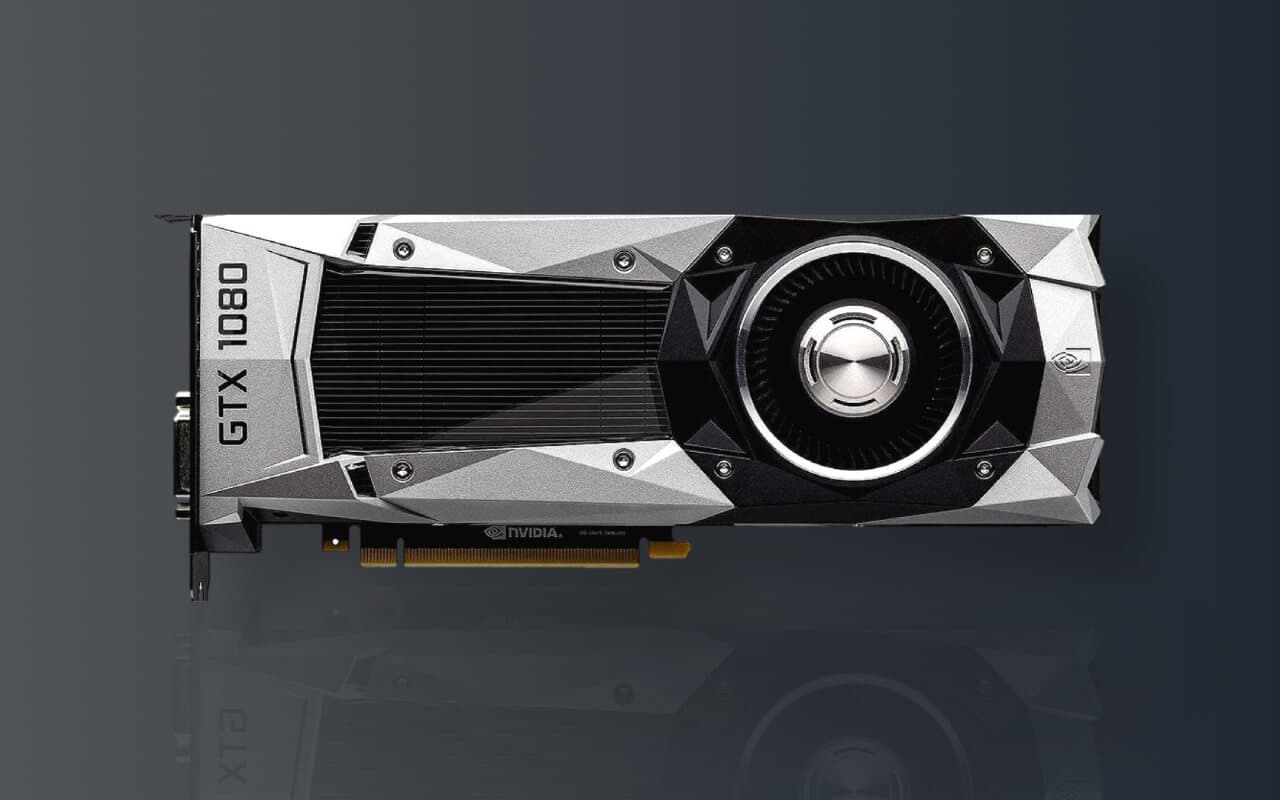
Disclosure: This post may contain affiliate links. If you purchase through these links, we may earn a small commission at no extra cost to you.
For years, the honest answer to this question was "yes, surprisingly." In 2026, it finally isn't — and it's worth being precise about why, because the GTX 1080 didn't get slow so much as the industry moved past it.
Three things changed:
- Driver support ended. NVIDIA shipped the last Game Ready driver for Pascal (the whole GTX 10-series) in October 2025, closing out nine years of support. Only quarterly security-only updates continue, through October 2028. New games will never again get GTX 1080 optimizations or bug fixes.
- New AAA games are locking it out entirely. A growing list of titles requires hardware ray tracing even at minimum settings — Indiana Jones and the Great Circle and DOOM: The Dark Ages simply won't launch on a GTX 1080, and Assassin's Creed Shadows effectively requires an RT-capable card. This isn't "low settings" territory; it's a hardware floor the 1080 sits below.
- It never got modern upscaling's best version. Pascal has no Tensor cores, so DLSS was never available. AMD's FSR 2/3 upscaling does work on it (and helps a lot), as does Intel's XeSS in its universal mode — but the flagship features of the last five years belong to newer silicon.
So: still fine for esports and an enormous back catalog, no longer a card to build around. Here's the full picture.
What the GTX 1080 can still do in 2026
The 1080's raw rasterization is still roughly RTX 3060-class, and that buys real gaming:
- Esports: CS2 runs at roughly 80–100 fps at 1080p on optimized settings, and lighter titles like Valorant, Fortnite (performance mode), Rocket League, and League of Legends run in the hundreds of frames. As a pure esports card, it remains genuinely good.
- The pre-2023 back catalog: nearly everything released before the UE5/ray-tracing era plays well at 1080p high or 1440p medium — the FPS tables that used to fill this article (80+ fps in the AAA games of its day) still hold for those same games.
- With FSR: in games that include AMD's FSR 2/3, upscaling from a lower internal resolution keeps newer titles playable at 1080p — this is the single best trick for stretching a 1080 in 2026.
What it can't do anymore
- Mandatory ray-tracing games: Indiana Jones and the Great Circle (minimum: RTX 2060 Super / RX 6600), DOOM: The Dark Ages (same class, 8 GB VRAM), and effectively Assassin's Creed Shadows. Expect every id Tech and most major 2026+ releases to follow.
- Mesh-shader-era engines: Alan Wake 2 technically launches on Pascal but manages roughly 30 fps at 1080p lowest settings with aggressive upscaling — unplayable in practice. UE5 titles are similarly punishing.
- DLSS, ever: no Tensor cores, no DLSS in any form.
- Fresh drivers: any new game with a Pascal-specific bug will stay broken; October 2025 was the end of fixes.
One more 2026 note: Windows 10 support ended in October 2025. Pascal does have Windows 11 drivers (the final R580 branch supports it), so moving a 1080 system to Windows 11 — hardware permitting — is fine.
What's the modern equivalent of a GTX 1080?
The most common question about this card now has a clean answer. In pure rasterization:
| Pascal card | Roughly equivalent modern card | Notes |
|---|---|---|
| GTX 1080 | RTX 2070 / RTX 3060 12GB | RTX 2070 is ~3–6% faster; 2070 Super ~16% faster |
| GTX 1080 | vs RTX 4060 | 4060 is roughly a quarter to a third faster, at ~115 W vs 180 W |
| GTX 1080 Ti | RTX 3060, nudging toward 3060 Ti | the Ti holds ~64 fps average at 1080p ultra in recent 12-game retests |
The equivalence flatters the 1080 slightly: the modern cards add ray tracing, DLSS/FSR frame generation, AV1 encoding, and much lower power draw. Equal frames, unequal features.
Is a used GTX 1080 worth buying in 2026?
At the right price, as a stopgap only. The used market has finally deflated: a GTX 1080 typically sells for around $90–150 on eBay (average ~$110), and a 1080 Ti for $130–160. The $500–800 scalper era this article once warned about is long gone.
At ~$110 it's a reasonable "get me through the semester" GPU for esports and older games — with eyes open about the driver situation and the AAA lockouts. It is not worth $200+, because that money is close to a modern card with none of the caveats. And if you're buying any GPU for a new build, buy something with ray-tracing hardware; the requirement lists have made that non-optional.
Upgrade paths from a GTX 1080
Fair warning: 2026 GPU prices are inflated — memory-chip costs and tariffs pushed street prices well over MSRP this year, so treat these as checked-July-2026 ranges:
- Intel Arc B580 12GB (~$250 MSRP, ~$300 street) — the consensus budget value pick, roughly 1.5x the 1080 with 12 GB of VRAM.
- AMD RX 9060 XT 16GB (~$460 street) — the mainstream price-performance favorite this generation; the 16 GB buffer is the durable choice.
- NVIDIA RTX 5060 Ti 16GB (~$430+ street) — the NVIDIA route, with DLSS 4 and the strongest upscaling ecosystem.
All three land in the 1.5–2x range over a GTX 1080 while drawing similar or less power — the 1080's 180 W TDP and single 8-pin mean no PSU upgrade is needed for any of them. For a broader tier-by-tier look, see our best graphics cards under $500.
Frequently asked questions
Is the GTX 1080 still good for gaming in 2026? For esports and pre-2023 games at 1080p, yes. For new AAA releases, no — several won't launch at all without ray-tracing hardware, and driver optimizations ended in October 2025.
Did NVIDIA stop supporting the GTX 1080? Game Ready driver support for all GTX 10-series cards ended in October 2025. NVIDIA continues quarterly security-only driver updates through October 2028, including on Windows 11.
What is the GTX 1080 equivalent in 2026? Roughly an RTX 3060 or RTX 2070 in raw performance. An RTX 4060-class card is about a quarter to a third faster while using far less power — and adds DLSS and ray tracing the 1080 never had.
Can the GTX 1080 use DLSS or FSR? No DLSS — that requires RTX-series Tensor cores. AMD's FSR 2/3 upscaling works fine on the GTX 1080 and is the best way to boost its frame rates in supported games; Intel's XeSS also runs in its universal (DP4a) mode.
How much is a used GTX 1080 worth in 2026? Around $90–150 depending on condition and model, with the 1080 Ti at roughly $130–160. Prices finally normalized after years of shortage inflation.
The verdict
The GTX 1080 earned its reputation: nine years of driver support, and it still handles esports and a decade of great games without complaint. But 2026 is the year the answer to "is it still good?" flipped. The drivers are done, the mandatory-ray-tracing era has arrived, and $300–460 now buys a card 1.5–2x faster with the features modern games are built around.
Keep it if it's serving you — nothing about October 2025 made your installed games slower. Just don't buy into it at anything above stopgap money, and when you do upgrade, the jump will be the biggest you've felt since... well, since the GTX 1080. While you're fitting that much heavier modern card, mind the droop — here's whether GPU sag can cause crashes.

Tech enthusiast and founder of Technize. Passionate about making technology accessible and helping people make smarter buying decisions.